
Sitemap
A list of all the posts and pages found on the site. For you robots out there is an XML version available for digesting as well.
Pages
Posts
news
publications

Robustmix: Improving Robustness by Regularizing the Frequency Bias of Deep Nets
Published in NeurIPS 2022 Workshop on Distribution Shifts, 2022
An extension of mixup in the frequency domain that regularizes the deep nets for robustness to common corruptions.
Recommended citation: Ngnawe, J., NJIFON, M. A., Heek, J., and Dauphin, Y. Robustmix: Improving robustness by regularizing the frequency bias of deep nets. In NeurIPS 2022 Workshop on Distribution Shifts: Connecting Methods and Applications, 2022. URL https://openreview.net/forum?id=Na64z0YpOx.
Download Paper

Detecting Brittle Decisions for Free: Leveraging Margin Consistency in Deep Robust Classifiers.
Published in NeurIPS 2024, 2024
A novel property of deep robust classifiers that allows to use the logit margin as a proxy score for input margin and efficiently detect non-robust samples, vulnerable to adversarial attacks.
Recommended citation: Ngnawé, J., Sahoo, S., Pequignot, Y., Precioso, F., & Gagné, C. (2024). Detecting Brittle Decisions for Free: Leveraging Margin Consistency in Deep Robust Classifiers. The Thirty-eighth Annual Conference on Neural Information Processing Systems.
Download Paper | Download Slides

A Layer Selection Approach to Test Time Adaptation
Published in AAAI 2025, 2025
A gradient alignement method for layer selection in Test Time Adaptation.
Recommended citation: Sahoo, S., ElAraby, M., Ngnawe, J., Pequignot, Y. B., Precioso, F., & Gagné, C. (2025, April). A layer selection approach to test time adaptation. In Proceedings of the AAAI Conference on Artificial Intelligence (Vol. 39, No. 19, pp. 20237-20245).
Download Paper

A Guide to Robust Generalization: The Impact of Architecture, Pre-training, and Optimization Strategy
Published in NeurIPS 2025 Reliable ML Workshop, 2025
This work presents the most comprehensive benchmark of robust fine-tuning to date, revealing how architecture, pretraining, and adaptation choices impact robust generalization across diverse datasets, perturbations, and training protocols.
Recommended citation: Heuillet, M., Bhagwatkar, R., Ngnawé. J., Pequignot, Y., Larouche, A., Gagné, C., Rish, I., Ahmad, O., Durand, A. (2025). A Guide to Robust Generalization: The Impact of Architecture, Pre-training, and Optimization Strategy. arXiv preprint arXiv:2508.14079.
Download Paper

Robust Fine-Tuning from Non-Robust Pretrained Models: Mitigating Suboptimal Transfer With Epsilon-Scheduling
Published in ICLR 2026, 2026
We study robust fine-tuning (RFT) of non-robust pretrained models and show that robust objectives cause suboptimal transfer. We propose Epsilon-Scheduling, which enables optimal transfer and improves expected robustness.
Recommended citation: Ngnawé, J., Heuillet, M., Sahoo, S., Pequignot, Y., Ahmad, O., Durand, A., Precioso, F., Gagné, C. (2026). Robust Fine-Tuning from Non-Robust Pretrained Models: Mitigating Suboptimal Transfer With Epsilon-Scheduling. The Fourteenth International Conference on Learning Representations (ICLR 2026).
Download Paper
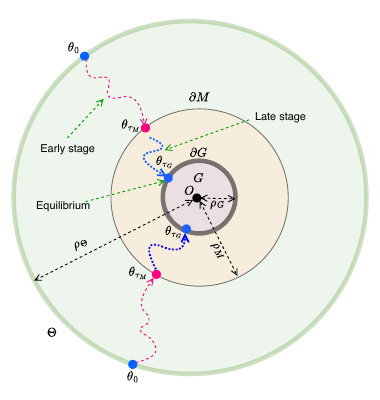
A Stochastic–Geometric Theory of Scaling Laws in Grokking
Published in Preprint — under review, 2026
A theory connecting the geometry of optimization trajectories to delayed generalization, with grokking scaling laws for learning rate, batch size, and regularization.
Recommended citation: Luo, R., Gagné, C., Ngnawé, J., Ullah, I., & Morrissey, K. (2026). A Stochastic–Geometric Theory of Scaling Laws in Grokking. arXiv preprint arXiv:2606.30388.
Download Paper
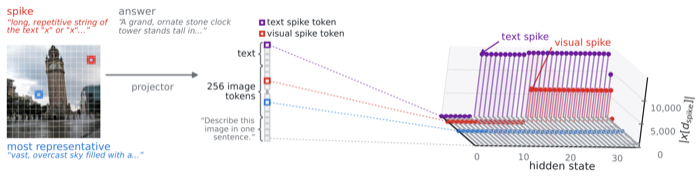
Mind the Spike: Mechanisms and Brittleness of Visual Massive Activations in Large Vision–Language Models
Published in Preprint — under review, 2026
We study how visual activation spikes form in large vision–language models, their sensitivity to image perturbations, and an intervention that suppresses them.
Recommended citation: Ngnawé, J., Pequignot, Y., Sahoo, S., Gagné, C., Precioso, F., & Koyejo, S. (2026). Mind the Spike: Mechanisms and Brittleness of Visual Massive Activations in Large Vision–Language Models. arXiv preprint arXiv:2609.32808.
Download Paper
RobustGenBench: A Benchmark for Robust Generalization to Adversarial and Common Perturbations, with Applications to Vision and Vision-Enabled Large Language Models
Published in NeurIPS 2026, Evaluations and Datasets Track, 2026
A benchmark for evaluating robust generalization to adversarial and common perturbations in vision models and vision-enabled large language models.
Recommended citation: Heuillet, M., Ngnawé, J., Bhagwatkar, R., Pequignot, Y., Larouche, A., Gagné, C., Rish, I., Ahmad, O., & Durand, A. (2026). RobustGenBench: A Benchmark for Robust Generalization to Adversarial and Common Perturbations, with Applications to Vision and Vision-Enabled Large Language Models. NeurIPS 2026, Evaluations and Datasets Track.
Margin-based Progress Measures for Grokking
Published in NeurIPS 2026 Workshop — Neural Network Artifacts as a New Data Modality, 2026
We track instance margins (logit margin and distance to the decision boundary) as progress measures for grokking: test margins stay low during memorization and rise with delayed generalization.
Recommended citation: Ngnawé, J., & Tikeng Notsawo, P. J. (2026). Margin-based Progress Measures for Grokking. NeurIPS 2026 Workshop on Neural Network Artifacts as a New Data Modality.
Download Paper
talks
| KmerAI Talks | Detecting Brittle Decisions for Free: Leveraging Margin Consistency in Deep Robust Classifiers |
Published:
| Slides | Video |
| Galsen AI Reading Group | Detecting Brittle Decisions for Free: Leveraging Margin Consistency in Deep Robust Classifiers |
Published:
| Slides | Video (in French) |
| Galsen AI Reading Group | Robust Fine-Tuning from Non-Robust Pretrained Models: Mitigating Suboptimal Transfer With Epsilon-Scheduling |
Published:
| Slides | Video (in French) |
teaching
Teaching Assistant (Tutor) at AIMS-Cameroon
Master's course, AIMS-Cameroon, 2017
Teaching assistant at the Mathematical Institute for Mathematical Sciences in Cameroon.
Crash Course Introduction to Statistical Machine Learning
Seminar, Ecole Nationale Supérieure Polytechnique de Yaoundé, Computer Engineering Department, 2019
A one week introductory class to statistical machine learning to 4th year students based on the lecture notes of Prof. Marc Deisenroth (AMMI2018)
Teaching Assistant/Introduction to Machine Learning by Christian Gagné
Undergraduate and Graduate course, Université Laval, 2022
Course description on Prof. Christian Gagné’s page Fall sessions: Since 2022 French: Introduction à l’apprentissage automatique GIF-7005 English: Introduction to Machine Learning GIF-7015